

NetSuite is Oracle’s cloud ERP, built for mid-market companies that have outgrown QuickBooks and disconnected spreadsheets. This guide covers what it does, how it differs from accounting software, who it fits, what it costs, and how it gets implemented.
Most companies don’t go looking for an ERP. They get pushed into the conversation by a close that keeps slipping, a board asking for consolidated data that takes days to pull, or growth that has finally outpaced the tools holding everything together.
If you’re at that point, this guide is for you.

What Is NetSuite?
NetSuite is Oracle’s cloud-based ERP (Enterprise Resource Planning) platform. It’s designed to replace the disconnected collection of tools most growing businesses rely on, including accounting software, spreadsheets, separate inventory systems, and standalone CRM, and bring everything into one place.
Over 43,000 companies worldwide run on NetSuite. It’s used across industries ranging from food and beverage and manufacturing to medical device, wireless communications, and professional services. Its core customer base is mid-market companies: businesses that have outgrown entry-level software but aren’t ready for a complex enterprise rollout.
What Does NetSuite Actually Do?
NetSuite is built around a single, unified database. Every module, including financials, inventory, order management, CRM, and reporting, runs on the same platform and shares the same data in real time.
That matters because most mid-market companies don’t have a software problem. They have a data problem. Information lives in different systems, reconciliation takes days, and by the time leadership has a clean number, it’s already out of date.
NetSuite solves that by connecting the parts of the business that were never designed to talk to each other.
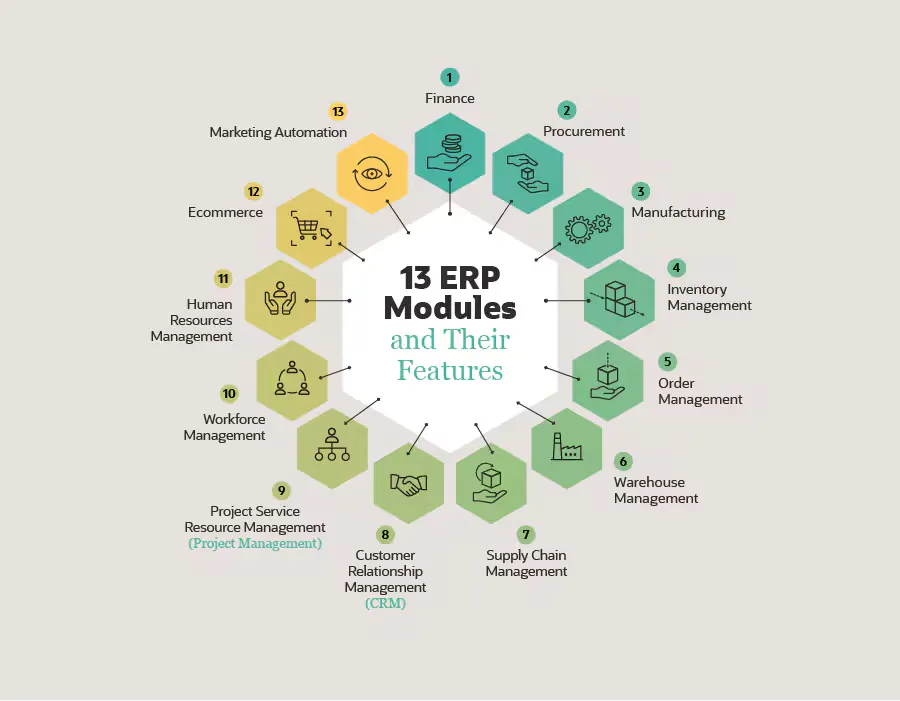
Core capabilities include:
Financial Management — General ledger, accounts payable, accounts receivable, multi-entity consolidation, revenue recognition, and financial close management
Inventory and Order Management — Real-time inventory across locations, automated replenishment, order fulfillment, and COGS tracking
Reporting and Dashboards — Role-based dashboards, customizable reports, and real-time visibility across the business without manual exports
CRM — Sales force automation, customer service management, and marketing tools natively connected to financial and operational data
Procurement — Purchase orders, vendor management, and spend tracking connected directly to inventory and financials
eCommerce — B2B and B2C commerce capabilities natively integrated with inventory and order management
How Is NetSuite Different From Accounting Software?
NetSuite handles the books and everything connected to them. QuickBooks and similar tools only handle the books.
QuickBooks and similar tools are built for accounting. They handle invoices, expenses, and bank reconciliation, and they do that job well at a certain stage. NetSuite is built for operations: it connects inventory, orders, fulfillment, reporting across entities, and the workflows that run between departments to the financials.
The practical difference shows up in a few places:
Reporting. In QuickBooks, pulling a consolidated report across multiple entities or locations requires manual work outside the system. In NetSuite, it’s a standard function.
Inventory. QuickBooks offers basic inventory tracking. NetSuite connects inventory to purchasing, order management, and financials in real time, so when stock moves, every part of the business sees it immediately.
Scale. QuickBooks Desktop Enterprise tops out at 40 simultaneous users on a single ledger; QuickBooks Online caps lower, at 25 users on its top plan. NetSuite is designed to grow with the business, adding subsidiaries, currencies, locations, and modules without requiring a platform change.
Is NetSuite Modular?
Yes. NetSuite is sold and configured in modules, so companies start with what they need and add capabilities over time.
Most companies begin with core financials: the general ledger, AP, AR, and reporting. From there, they add inventory management, manufacturing, CRM, ecommerce, or other modules as the business grows and operational needs become clearer.
This matters because over-building at go-live is one of the most common and avoidable ERP mistakes. Starting with a focused scope, proving value quickly, and expanding deliberately is almost always the better path.
Who Is NetSuite Built For?
NetSuite is best suited to mid-market companies with $10M–$250M in annual revenue that have outgrown basic accounting software.
It also works well for:
- Multi-entity businesses managing multiple subsidiaries, locations, or legal entities that need consolidated reporting
- Companies with inventory complexity , including multiple locations, co-manufacturing, demand planning, or traceability requirements
- Fast-growing businesses that need a platform built to scale without a system replacement every few years
- Companies coming off QuickBooks or legacy systems that need stronger controls, real-time data, and operational visibility
Two quick examples: Aurora Spine, a medical device company, and Inari Medical, which manufactures devices to remove blood clots, both outgrew their previous systems and moved to NetSuite for the scalability and compliance support their growth required. On the food and beverage side, BERO, a growing beverage brand, made the same move to support rapid growth.
What Does It Cost?
NetSuite pricing is subscription-based and built around your specific configuration. User count, modules, and business complexity all factor in. Oracle doesn’t publish a standard price list, which is why most buyers find it difficult to get a clear number early in the process.
At a high level, costs include a base platform fee, per-user named licenses, and any add-on modules. Implementation is a separate investment, scoped and priced based on project complexity.
The honest answer: the range is wide. A focused, phased deployment for a mid-market company looks very different from a multi-subsidiary enterprise rollout. Getting to an accurate number requires understanding your actual scope, including users, modules, integrations, and data migration needs, before any vendor conversation starts. Our NetSuite Pricing Guide walks through how that scope translates into cost.
How Do You Implement NetSuite?
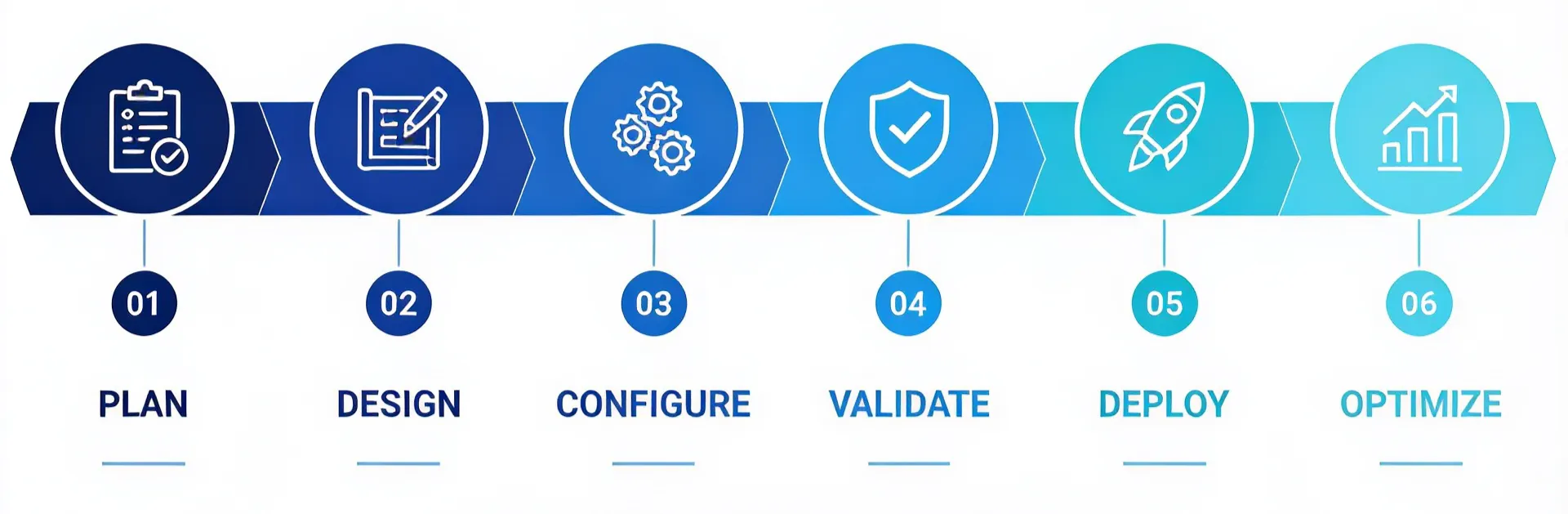
NetSuite can be implemented through Oracle directly or through an authorized Solution Provider partner. Most mid-market companies work with a partner, since the implementation experience, ongoing support, and long-term relationship are all meaningfully better when there’s a firm accountable for the outcome beyond the go-live date.
Implementation timelines typically range from 6 weeks for a focused financial deployment to 6 months for a more complex, multi-module rollout. A phased approach, starting with core financials and expanding over time, is almost always the right way to structure the project. This is the same phased methodology behind our NetSuite Implementation Services.
The Bottom Line
NetSuite is Oracle’s cloud ERP platform built for mid-market companies, roughly $10M–$250M in revenue, that have outgrown QuickBooks or basic accounting software.
For companies at that stage, NetSuite is one of the most capable and scalable platforms available. It’s built to grow with the business, adding users, entities, modules, and complexity without requiring a platform change down the road.
The companies that get the most value from NetSuite share a common experience: once the system is configured correctly and the team is using it well, they wonder how they managed without it. Faster closes, cleaner data, and leadership that can finally see the full picture of the business in real time: that’s what a well-implemented NetSuite looks like.
If you’re starting to evaluate your options, understanding what NetSuite can do for your specific business is the best place to start.
About Luxent
We're a boutique NetSuite consulting firm helping mid-market companies evaluate, implement, and optimize NetSuite. We bring hands-on experience across food and beverage, medical device, healthcare, wireless communications, and more, and we build every system around how the business actually operates, not a generic template.
If you’re starting to evaluate NetSuite and want a straight answer on whether it’s the right fit, we’re happy to have that conversation.
See whether NetSuite fits your business
Get a straight answer on whether NetSuite is the right platform for your mid-market company.